Ten Years Of Rent Growth, Then It Just Stopped
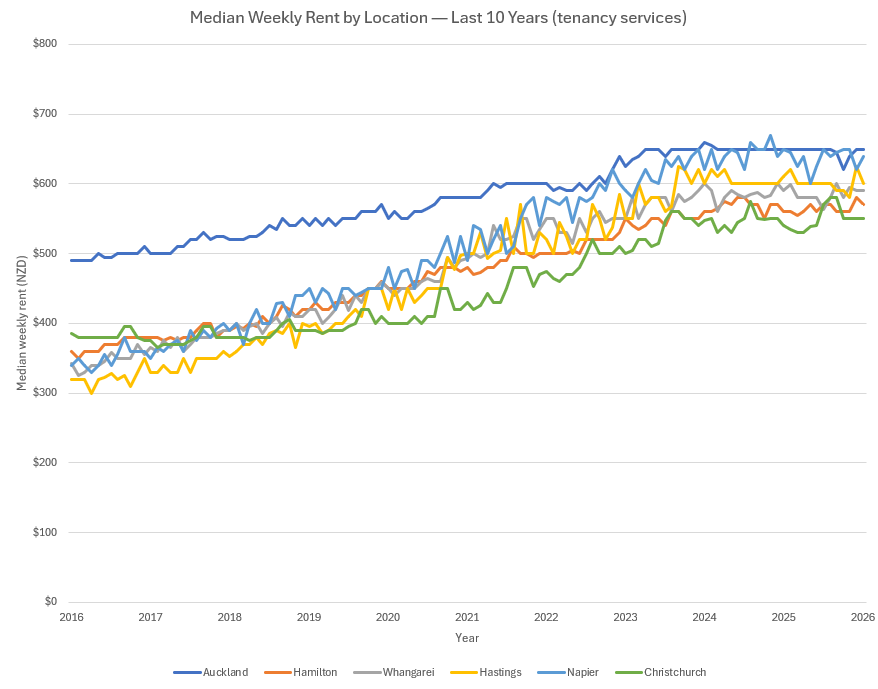
Auckland’s median weekly rent went from $490 to $660 between 2016 and 2024 — up 35%, and most years compounding at 4-6%. Then it stalled. It’s sat at $650 for the best part of three years now. Nationally the pattern is almost identical: median rent climbed from $390 to $600 over the decade, a 54% rise, with the biggest jumps landing in 2021 and 2022 when it grew nearly 9% in a single year.
Why Did A Decade Of Growth Just Stop?
More landlords, more houses, more choice. Rental stock nationally has grown 45% over the same ten years — Auckland’s by a third — and most of that growth has landed in just the last two. To put that into context our population has grown by about 15% in the past ten years. Active tenancies in Auckland alone are up over 9% in the past twelve months. That’s a lot of new supply competing for tenants who, frankly, don’t have to take the first place they see anymore. We feel there are two aspects which continue to bring supply on stream.
- Mum and dad investors taking a different strategy – building to rent
- Developers not getting enough to sell – converting to rental
Good for new investors?
Zoom out to the decade and two things are true at once: rents are still a third to a half higher than they were in 2016, and the growth that got them there has cooled off right when supply finally caught up. This is great for tenants that needed a respite. Interestingly if you are buying an investment property in todays prices, some areas have started to see better returns.
A flatter rental market also usually means:
- Steadier tenant relationships — keeping good tenants happy and making the home more appealing, this needs a little more thinking now. Do you put in lower maitenance lawns – do you consider solar to stand out
- A market correcting itself — supply catching up with demand is exactly what needed to happen after years like 2021 and 2022, when rents jumped close to 9% in twelve months
It seems like a more sustainable market — and the decade-long trend line still points up.
It’s Not Uniform Everywhere
This is where it gets interesting for anyone still shopping. Queenstown-Lakes rents are still up over 5% in the past year — tight supply, strong demand, different dynamics entirely. Hamilton, Tauranga, Wellington and Christchurch are all still nudging up 1-2%. Auckland and the big centres have had more supply come on stream.
Stability in Tenancy Law
The big shifts already happened, back in 2024.
The Residential Tenancies Amendment Act 2024 brought back 90 days’ notice to end a periodic tenancy with no cause, and made fixed-term tenancies easier to let expire on their end date instead of automatically rolling into a periodic one. That was the headline change for landlords, and it’s been in force since early-to-mid 2025.
Since then it’s been narrower stuff:
- Pet rules (December 2025) — landlords can only decline a pet with reasonable grounds, but can also charge a pet bond of up to two weeks’ rent to cover it
- Technical tidy-ups (March 2025) — things like electronic notices and clarifying smoking clauses, sensible housekeeping rather than anything that changes how you run a rental
- Meth contamination rules (April 2026) — new testing and decontamination standards, relevant if it ever comes up, but not something that touches day-to-day management for most landlords
Nothing on the horizon that looks like the scale of change we saw a few years back.
What This Means If You’re Investing Now
Think about if cashflow is important and growth in it. This will help define where and the type of property you target. We have some general info on which areas are safer on capital or offer better rent return.