Hamish Patel and Sandy recently sat down to dig into the new KiwiSaver changes and crunch some numbers that might just make you rethink how you’re approaching your retirement savings. The short version: small changes now can mean a dramatically different retirement. But there are some important nuances worth understanding before you rush to top up.
$1,000 More Per Year — What Does It Actually Mean at Retirement?
It might not sound like a lot. But an extra $1,000 a year into your KiwiSaver — roughly $83 a month — compounds in ways that can be surprising over a 30–35 year horizon.
The magic isn’t the $1,000 itself. It’s the decades of compounding returns on top of it, combined with the employer contribution match and government top-ups that come along for the ride. Over time, what feels like a modest lifestyle adjustment today can translate into a meaningfully different weekly income in retirement.
Fund Type Matters — A Lot More Than Most People Realise
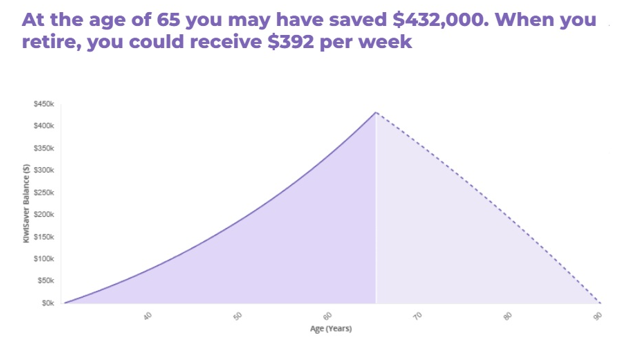
This is probably the most underappreciated factor in KiwiSaver. Take a look at these two projections for someone with 35 years until retirement:
Moderate fund
Aggressive fund
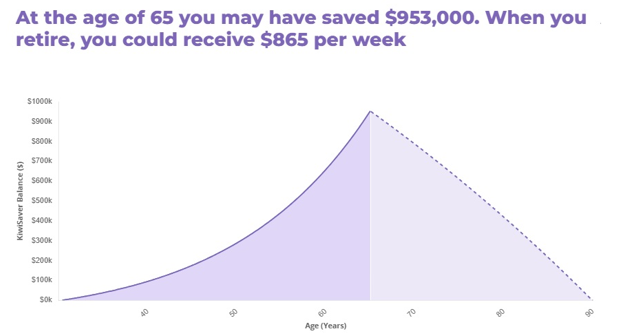
Same person. Same contributions. The only difference? The fund type.
The moderate fund projects a balance of $432,000 at retirement — delivering around $392 per week. The aggressive fund projects $953,000 — nearly $865 per week. That’s more than double the retirement income, and neither projection includes NZ Super on top.
For someone with a long runway to retirement, sitting in a conservative or moderate fund because it “feels safer” could be one of the most expensive financial decisions they make. Time in the market buffers the short-term volatility of a growth-oriented fund. If you’re decades away from retirement and in a conservative fund, it’s worth having a conversation about whether that actually matches your risk profile — or just your risk anxiety.
Should You Put Extra Contributions into KiwiSaver — Or Somewhere Else?
Here’s where it gets interesting. Once you’re contributing enough to get your full employer match, there’s a genuine question about whether funnelling additional savings into KiwiSaver is the best move.
KiwiSaver is locked away until age 65 (with limited exceptions). That’s great for retirement discipline, but it’s not ideal for everyone’s full financial picture. A well-managed investment fund outside of KiwiSaver gives you:
- Flexibility — access your money if life throws a curveball
- Strategic options — use funds for property deposits, business opportunities, or bridging income
- Comparable returns — quality managed funds can perform similarly to KiwiSaver growth funds, without the lock-in
This isn’t an argument against KiwiSaver — it’s a great vehicle, and the employer contribution alone makes it worth using to the maximum match. But for money beyond that, a flexible managed fund might serve you better depending on your timeline and goals.
The Bottom Line
KiwiSaver isn’t a set-and-forget thing. The fund you’re in, how much you contribute, and where you put any additional savings can have an impact on your retirement. These aren’t complex decisions, but they do benefit from proper, tailored advice.
If you’d like to talk through what the right setup looks like for your situation, book a chat here.
Please note: This post is intended as general information only and does not constitute personalised financial advice. We recommend seeking advice tailored to your own circumstances from a qualified financial adviser.