What if you could retire with $2 million?
Getting to $2,000,000 in retirement seems within reach with the right kind of planning – we study a case in this clip on how this is possible with KiwiSaver and two relatively modest investment property purchases. This $2m in this example is inflation adjusted in the actual funds these clients would get would be more than this, however will feel like $2m when they spend it. This figure is without selling their own home of course as most people want to continue to live in their neighborhood.
My own approach
I am a little different in that I have been forced to ensure the property I buy has a strong cashflow relative to the price. Why? My main business is in the same industry as my assets – so when one tanks so does the other. For that reason I have to ensure that my investment properties do not require a big input from me, cashflow wise.
So they have to cashflow neutral or positive within a short time frame. This I have achieved by keeping a little do-up money to make things nicer for the tenant which also means a little more in rent. The other strategy I use to get better cashflow is to not compete with home buyers when buying. So the areas are more rental type areas, this means the buying price has a better relationship with the rent. The risk with this strategy is that capital gain might take longer to realise but I am ok with that as I do not have any looming deadline to sell.
It’s not timing, it’s inflation vs. debt
In the same vein that inflation erodes money it also erodes negative money. So over the long term the weight of the debt amount shrinks. I say over the long term as the road can be rocky to get there – there are times of high inflation and low inflation. This is the real engine for investing with long term debt.
However the risk here is anything that can disrupt your path to get to the long term. Such as interest rates. This is why its so important to match the property type with the personal income to ensure that there is a balance between security of price appreciation and the monthly budget.
The good thing over the long term, rent is also subject to inflation, growth in rent seems to track growth in wages. So over the long term the numbers get better.
The case study — Mitch and Elena
So let’s put this into a real example. Meet Mitch and Elena, a couple in their early 40s on a combined income of approx $200,000 before tax, plus an existing home loan. We can pull real numbers straight from their bank statements to build this out properly, including the lumpy stuff like an approx $20,000 a year holiday – so what you’re seeing isn’t theoretical, it’s how this couple actually spends.
In this scenario they buy an investment property now for approx $600,000, and pick up a second one a couple of years later, on top of their own home. The capital gain assumption here is approx 6% nominal, or approx 3.8% once inflation is stripped out – so the number that eventually lands in the bank will look bigger than that, but it will feel like today’s dollars when they come to spend it.
The plan is to sell one of the investment properties once they hit their 50s. That clears debt and frees up cash flow heading into retirement. The result is a comfortable retirement where the money effectively doesn’t run out.
What if they’d just relied on KiwiSaver?
Now strip the investment properties out and just look at their own home plus KiwiSaver. Interestingly, they’re still mortgage free by their late 50s – because all that spare cash flow that would otherwise have gone into servicing investment debt just goes into paying off the home loan faster instead.
In retirement they can still get by on KiwiSaver and drawing down their savings – probably. But here’s the sting: No wiggle room in retirement + they’re likely to die with close to zero left over. No inheritance, no legacy for the kids. Sounds fine, until you ask what’s actually left for the next generation.
The real cost of holding property
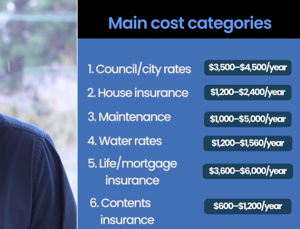
None of this comes for free, and I don’t want to gloss over that part. Holding a property costs real money – rates, insurance, maintenance – approx $10,000 per property per year. And that’s before principal repayments kick in once the interest-only period ends (we’ve modelled approx 5 years interest-only here).
So there are years where a decent chunk of the surplus cash flow is going straight into holding these properties rather than into the couple’s own pocket. That’s exactly why selling one in their 50s makes sense – it lightens the load right when they need it to.